Farmland & estates
Field margins, hedgerows, paddocks and the routes wildlife takes between them.
Cheshire · North West
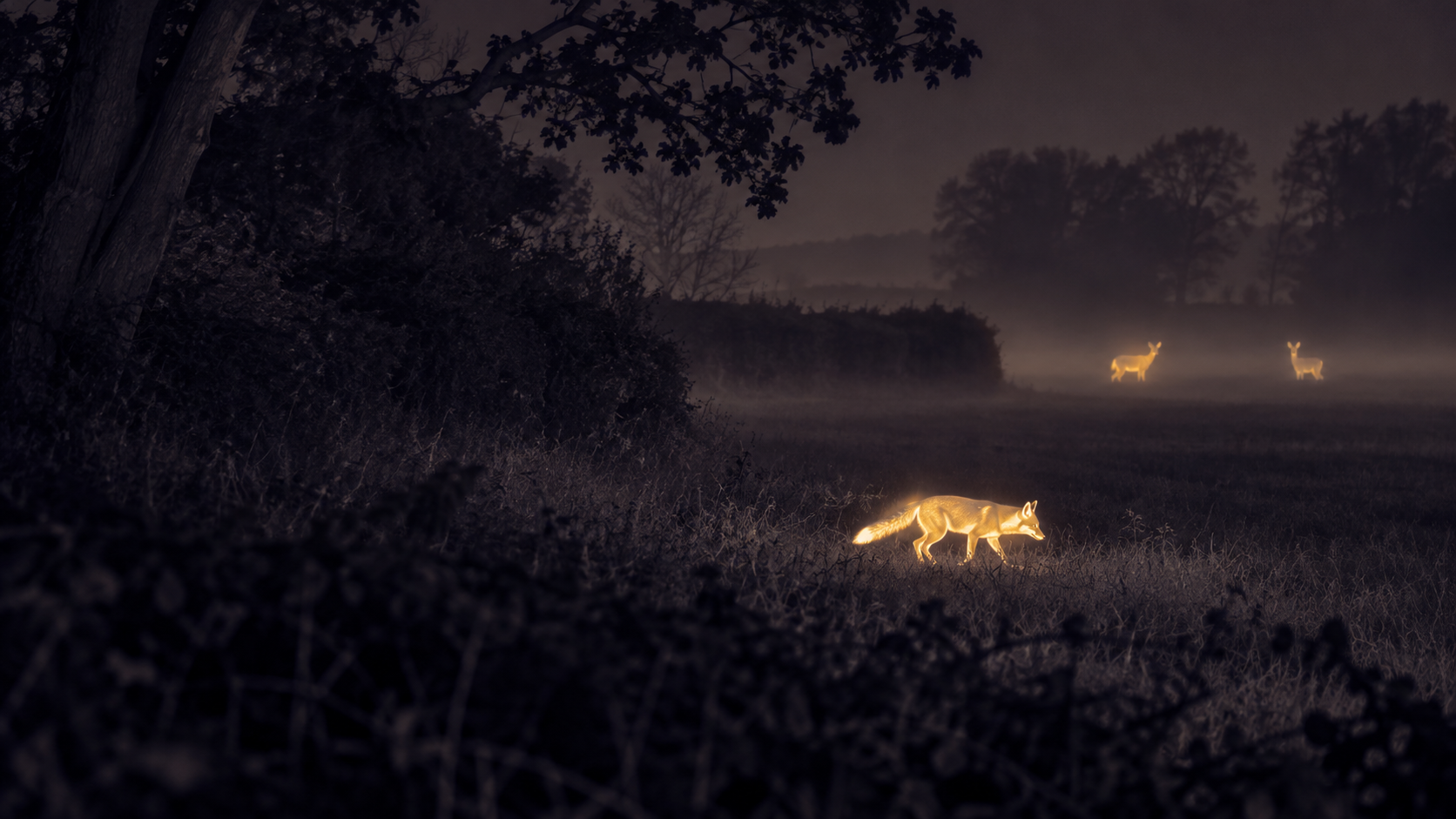
Long-range thermal and optical monitoring reveals the wildlife using your land when the daylight disappears.
Illustrative thermal scene
We use long-range thermal detection alongside optical imaging to observe, identify and document wildlife that conventional daytime visits can miss.
Field margins, hedgerows, paddocks and the routes wildlife takes between them.
Edges, clearings and overlooked corridors where nocturnal species move and forage.
Banks, reed beds and waterside habitats monitored without disturbing the darkness.
We learn about your site, access and the questions you want the night to answer.
Thermal imaging finds movement; optical imaging adds detail where conditions allow.
You receive selected footage and a concise record of species, times and movement.
Field notes
Each watch can capture time, species, approximate distance, direction, behaviour and weather—building a useful picture of how wildlife uses a site.
We’re looking for interesting locations across Cheshire and the North West: farms, estates, woodland, lakes, nature reserves and private land.